The Bigger Question: An AI, But Not AI Story

Mom sat on the couch across the room from me. A mug filled with coffee rested on the windowsill next to her as she regaled me with the latest news. Our most recent addition, a full-sized puppy—part Tasmanian devil, part wanna-be throw-blanket, had decided mom was no longer interesting. She’d taken herself and her chew toy elsewhere. But she’d be back. She’d always be back…

Watching for the inevitable return of the destruct-o-mutt out of the corner of my eye while mom talked has become a bit of a sport in and of itself over the last several months. Sure, the dog is a ball of cuteness, but if one didn’t pay attention to what was going on in the other room, if you were just a second too slow to adjust your position or to take action—well, you might just find yourself with a steaming puddle of coffee in your lap when she came back at full sprint.

Mom leaned forward. “So, I’ve been hearing a lot about AI… Should I be worried?”

There’s a story about Joe Kennedy, the father of the future president, and an encounter with a shoeshine boy. Supposedly, this happened back in 1929. I’m reminded of this story for no particular reason, but thought I’d share it anyway. Anyway, the story goes that almost 100 years ago, the stock market was going crazy. Joe had already been making money in the market for a while by then, but now so was everyone else. Everyone had opinions on potential trades and investments—many based only on secondhand information—including the lowly shoeshine kid.

One day, Joe goes to get his footwear cleaned up. While sitting on the bench, the boy offered up some stock tips.

It was likely just the kid’s way of making conversation in an attempt to earn an extra tip for his trouble. He probably thought nothing of it. However, Joe viewed the conversation differently. From his perspective, when kids who’d likely never seen the inside of a boardroom started to believe they knew enough about the markets to offer financial advice to random people they just met off the street, dumb, reckless decisions were bound to happen.

Joe took it as a sign. At a time when everyone else was betting on Wall Street’s continued boom, Joe took the opposite approach. He bet the other way. He took his money out. As a result, his money stayed safely in his pockets when the bubble finally burst. His family thrived through the Great Depression and is now in the various positions they serve today.

Interpret the Kennedy shoeshine story however you see fit, but back to mine…

“You want to know if I think AIs could kill us?”

She nodded. It’s worth noting that no one wanted my opinion about AIs and killer robots while Battlestar Galactica was on.

I’ll spare you the direct quotes, but the short answer is yes, I do believe these systems have the capability to inflict great harm. I believe this in the same way that I believe the destruct-o-mutt could break a mug and scald my lap with hot coffee. My dog loves to run. To jump. To be all up in your personal space. I recognize she has powerful jaws and an unstoppable wall of muscles that, once launched at you, just don’t quit. She’s a force to be reckoned with.

And yet…

It comes down to nature vs. nurture, opportunity vs. intent, program vs. programmer. My girl is the wussiest fur baby you’ve ever met. She’s afraid of fly swatters and things that go ‘pop!’ We’ve had to move her food dish around because the corner of the kitchen suddenly spooked her. She cowers in fear at the sound of these four letters: “B,” “A,” “T,” “H,” and high-tails it out of the room if she so much as gets a glance of the nail trimmers. The question, therefore, isn’t whether I believe she is capable of causing destruction—she is; it’s more like: do I believe causing full-scale destruction is the only option?

The answer to that second question is a resounding no. I can write this with great confidence. I love my dog. She’s a menace to society, sure, but she’s my menace. I recognize that she’s like Jessica Rabbit. She’s not intrinsically bad; she’s just drawn that way.

An AI generated picture of a white and brown mixed breed dog that is standing beside an incident sign. The dog is wearing a superdog costume on and there are torn up toys all over the floor
Image generated by AI

My goofy girl is intelligent and yet childlike in her innocence and eager to please. This combination has made her highly trainable (to an extent). It took her a few months, but she’s figured out the rules of our household and contributes in her own way. She understands a basic command (whether she listens to them every time is another story). She helps us stay healthier by keeping us active; she brings us joy and provides a needed snuggle or a bit of comical relief. She’s my office assistant and a sweet and loving companion. In short, she makes our lives easier or more difficult depending on the angle you look at it from, but always better by being a part of them.

A day without her knocking something over, slipping out of the gate, or ripping up one of her toys is never guaranteed, but I am not living in fear of what she might do. Why? Because I’ve made it a point to understand her. I’ve made it a point to anticipate how she’ll react, to establish boundaries and guardrails, and to do my best to limit her exposure to potentially dangerous environments. I check the gate latch. I put her on a leash on walks. I’ve listened to experts. I’ve been a responsible pet parent. I’ve been the adult in the room.

We need to listen to those raising the alarm. They know what these tools can do better than anyone. They saw it. They understand what’s going on behind the scenes. They trained these systems firsthand.

We’ve given these software systems access to our financial records and healthcare information. We’ve asked the tools to map out entire genetic sequences—they now have better access to the data about what makes us tick than we do. We’ve given autonomous software control of traffic lights and over our food storage. So the question isn’t: can AIs wreak irrevocable havoc on the human race? The question is: what can we do to mitigate this potential outcome? And that’s a decidedly more complicated answer.

I guess it just comes down to whether or not we are willing to be the adult in the room about it.

When Science Meets Magic – A Technology Round-up

science meets magic - a technology round-up -www.alliepottswrites.comIt has taken a bit to adjust to my new working schedule, especially as it pertains to writing for myself. When you find yourself researching and writing articles every day, it can be difficult to will yourself into remaining in your desk chair for an extra hour or two outside of regular business hours. If only the darn book would write itself, I’ve often complained. The story is there – swimming in my head. It’s just getting the words out on paper (or computer screen) that’s the problem.

Why don’t you try Dragon dictation? Some of my author friends have suggested. Once you get used to it, it is amazing how fast you can finish a draft.

Unfortunately, this would require I actually speak my story out loud. This means formulating the words to go along with the images floating around in my head, which is actually the hardest part of the process for me. Not only that, but I know from past personal experience, it isn’t a good idea for me to get into a habit of speaking as if no one can hear me. I tend to forget to turn it back off when I am around others.

Well, as luck might have it, I may just have a workaround soon. Back in April, researchers at MIT announced that they had created a wearable device that can ‘hear’ the voices words you say in your head, which is also known as subvocalization. The device itself looks like a cross between Google Glass and the headset used by a presentational speaker and picks up the electrical signals you generate when you think about words.

Speaking of Google Glass – Intel is coming up with smart glasses that actually look like regular glasses (source: The Verge).

But even then I am still a mom. Even if I am working in a cone of silence, there is still a good chance that either of my loving children will demand that I stop everything at once so that I might hear how they destroyed a creeper in Minecraft yet again. Did you know that in Minecraft’s creative mode, you can’t die? It’s true. And guess what, it’s still true five minutes later too!

If only I had an invisibility cloak. Oh, wait, that’s almost here too (source http://www.engadget.com).

Of course, then I also still have squeeze my writing in around weekly chores like folding the laundry. Thankfully my kids are now old enough to help out in this task, though they aren’t entirely reliable and often their little bundles have to be refolded before they can be put away. But maybe this won’t be a problem much longer either with the invention of a laundry folding machine Rosie from the Jetson’s might approve of.

Admittedly there isn’t much magic in this machine, but I want one all the same. As far as I am concerned, it creates time, which is a trick indeed.

Although, while I am on the topic of machines taking over time-consuming jobs, I was somewhat troubled to learn that scientists are continuing to hone in on what it is to be creative. In 2016, a computer ‘created’ a Beatles-esq song. Another computer, named “Shelley” has taken a crack at creative writing and is already working on its next anthology (source: livescience). And this was all before Google’s Duplex Assistant came on the scene and started tricking everyone into thinking a computer program was human.

What this means is the clock is ticking for me to finish my current works in progress before I have a whole new level of competition. Therefore it is best if I stop complaining about having no energy to write after work and get my rear back in the seat because science fiction is going to be science fact before you know it.

Project Gene Assist


Watch and Wonders – Books, Tech and the Future with @alliepottswrite – SACHA BLACK

Watch and Wand Supply Run - www.alliepottswrites.comIt’s hard to believe I am already talking about The Watch & Wand’s release in the past tense, so instead, I invite you to follow the link to a conversation I had with Sacha Black regarding my thoughts on the future (I’ll give you a hint, I find it both exciting and terrifying). Once again I’ve disabled comments here. While you are there, check out information about the 2018 Bloggers Bash. I was lucky enough to attend this past summer and it was an absolute blast (educational too).

Today I am thrilled to have an epic geek-out with my dear friend and slave driver accountability partner Allie Potts. If you don’t know Allie, she writes both cyberpunk style dystopian fantas…

Source: Watch and Wonders – Books, Tech and the Future with @alliepottswrite – SACHA BLACK

Five Fun Facts You Never Knew About Technology

Five Fun Facts You Never Knew About Technology - www.alliepottswrites.com #humorIt all started Sunday. There I was, thoroughly engrossed in the latest episode of Game of Thrones, which I was streaming off my AppleTV.  Little did I know I would go through all the stages of grief before the night was done, but not for the reasons the show’s writers intended.

The scene opened with a woman, barely more than a girl, attempting to stay warm as snow fell all around. Winter had finally come.

The girl’s horse whinnied and pulled at its restraint. She looked up as the camera closed in. The angle shifted. The horse’s ear pivoted as it responded to a danger not yet evident on the screen. I readied myself for action as the camera returned to the girl’s face once more, her readiness to do battle all too clear. Then …

Then the scene froze and the infamous buffering wheel icon appeared on my screen.

[SHOCK & DENIAL] NOOOOOOOOOOOOOOOOO!!!!!

I wanted to chuck my beverage at the screen and scream, but I’m a responsible parent now and trying to set a good example (and electronics are expensive) so instead, I waited. And waited. And waited. But the icon refused to go the way it came.

Fun Fact Number 1: Unplugging the device won’t solve all problems

[PAIN] Figuring my router had yet again decided I needed more exercise in my life (it’s considerate like that), I balanced on the precarious edge of my children’s toy chest, stretching up to reset it. (The idea was to place it high enough where the kids couldn’t accidentally break it, but unfortunately, as my eldest at eight-years old is already almost my height, this requires placing it higher than I can reach on my own).

I returned to the television. The buffering icon stared back at me. I am sure if it could laugh maniacally at me, it would.

[ANGER] Fine. This could have been so easy, but you’ve made your choice. It’s time to do this the ‘hard’wired way.

I yanked the power cord from the streaming device as well. See how you like getting interrupted, punk.

Fun Fact Number 2: A ‘User-Friendly’ interface does not actually mean the technology is your friend

When the streaming device woke up from its thirty-second power nap I expected it to be well refreshed and ready to get back to work. But instead of seeing the usual easy to navigate screen of channels options I’ve grown to expect, only two options were presented to me – I could go to Settings or My Computer. Only that was a lie too as neither option took me anywhere. It was the technological equivalent of being given the silent treatment.

[BARGAINING] Dude, I know I just said some mean things, but thought we were buds! Can’t we move past this? I promise, just let me finish this one show and I’ll leave you alone for the rest of the night. You can even have the rest of the week off if that’s what you want. All I want is just fifteen more minutes.

Fun Fact Number 3: In the age of the Internet of Things, devices are more connected than you think

[DEPRESSION] After working on troubleshooting the problem for more than more time than I’d like to admit, I decided to give up on the AppleTV for the night and watch from the Roku I have in another room instead. The TV and sound quality isn’t as good in there, but what other choice did I have?

While the device powered up, and the channel options showed, HBO refused to load. Now, this could be explained by a spike in users online, but I like to think that my AppleTV sent a light speed signal ahead of me to the Roku player, convincing it to take its side over mine. After all, they do share the same network. Blood might be thicker than water, but bytes can last forever.

Fun Fact Number 4: You’ll never understand how isolated you’ve become until you see the ugly truth play out on social media

In a last-ditch effort, I sent a tweet out, alerting the public to my plight, hoping to hear that I wasn’t the only one affected by technological misery. Instead, I saw Game of Thrones trending, and like the glutton for punishment I’d become, I foolishly clicked on it. As meme after meme scrolled down my screen, it was clear that there was still a virtual viewing party going on out in the cyber world. It was also clear, I was no longer invited.

I sobbed (okay I didn’t really, but I sure thought about it). [LONELINESS]

Fun Fact Number 5: One of the best technological advancements of all time remains the printing press (but even that still has its own problems)

I gave up and went to bed, taking a book to help put my troubled mind at ease. [THE UPWARD TURN] I could trust a book. [WORKING THROUGH] A printed page was reliable in a way a television show broadcast over the internet could never be. [ACCEPTANCE] Yes, I told myself, as the ending was partially spoiled already anyway, seeing those final minutes could wait until tomorrow.

Sure enough Monday night I was able to tune back in and see how the scene played out. It was just as good as I’d imagined. Satisfied with my successful television (sorry, it isn’t television, it’s HBO) screen time, I returned to my computer to print some unrelated pages I would need for the following day.

A message box appeared.

“Please replace ink cartridge.”

NOOOOOOOOOOOOOOOOO!!!!!

Proving there is reliability in the age of technology, it’s just the type of reliability that’s governed by Murphy’s Law.

You have died of dysentery – and other thoughts on progress

You have died of dysentery and other thoughts on progress - www.alliepottswrites.com an essay about a childhood game and how technology changes words remain powerfulIt will no doubt stun my children to realize that their, oh, so young looking mother lived at a time when the majority of households lacked a personal computer.  I mean, personal computers existed, but they were the size of a microwave oven (or larger) and the cost more than a few car payments. As a result, the most exposure most kids received was in the computer lab at school. Considering the laws of supply and demand, the lack of household market also limited the number of available programs, especially those designed for young people.  However, our school system managed to find one that both educated and entertained (it helped it came bundled with the operating system). It was called – Oregon Trail.

Snorting
Modern day adaptation. Image courtesy of http://www.flickr.com

The premise was this – you started out in Missouri in the 1800s as an intrepid settler determined journey to Oregon’s Williamette Valley, a mere 2,170-mile / 3,490 km jaunt to the Western side of the USA, via covered wagon with only your family, a bit of cash, and what you could carry. Along the way you had to deal with challenges such as broken axles, fording streams, and a little thing called death going by the names of typhoid, dysentery, drowning, starvation, and/or snake bite.

It’s good old-fashioned fun for the whole family!

Imagine my delight, then, to find the powers that be, hoping to tap into the current nostalgia trend as evidenced by recent remakes or reunions of movies and shows from my youth, produced the analog remastered Oregon Trail – The Card Game. I couldn’t hand over my money fast enough, buying it for a friend.

We laid out the cards. We attempted to read through the rules. I may have drunk too much wine. Somehow, before we had called it a night, we managed to play two games and my character hadn’t died once. It was a feat I’d rarely managed in the computer version and the game, a fun reminder of how far society, as well as our technology, has come.

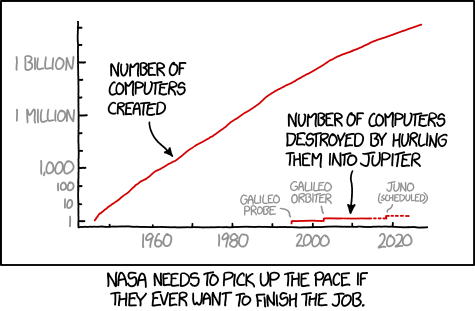
image courtesy of http://www.xkcd.com

My sons, on the other hand, have never known life before computers small enough to carry in your pocket and it has become easier to manage the list of names of families lacking a smartphone than those who have one. As a result, this little device has gone from a luxury item to a tool more necessary for the smooth functioning of my household as well as my community than the mailbox outside our door.

For example, Kiddo’s school required me to download not one but three apps just to handle daily communication. There is Remind – an app used for school-wide memos such as upcoming teacher work-days, class photos, and past due library book notices, Shutterfly Sites – a program containing his class list of contacts and volunteer / school supply sign-ups, and his teacher’s personal favorite, Class Dojo, which allows here to post pictures of their educational day, highlight individual student performance, and save on paper in the form of printed weekly newsletters. As a result, the majority of my phone’s notifications are school-based, not that I’m complaining.

I didn’t think anything of it then, to receive a message from Kiddo’s teacher indicating that an attached letter would be coming home in Kiddo’s school bag. However, opening the attachment, I realized this was not just another noticed about a school fundraiser or upcoming assignment. Oh no, nothing fun like that at all. Lice had been found in Kiddo’s classroom.

The rest of the letter went through the basics – how the very real version of cooties can make their homes on the scalps of adults and children alike regardless of cleanliness or personal care and what to do if you see their nits in your child’s hair. We verified that Kiddo hadn’t been colonized as soon as he came home, then again the next morning, and later the following day. And yet, even though I knew he hadn’t brought uninvited guests home, my scalp started itching just thinking about the words on that page.

Admit it. You are considering scratching your head now too after reading this.

Thus proving that while trends come and go and methods of communication evolve, the words we use to do so, will remain ever powerful – so use yours well.

And always be on the lookout for snakes.