Author SEO: Easy First Steps for Improving Your Book’s Chances for Discovery

This is another installment of my I Want to Self-Publish: Now What? Series.

According to the United National Educational Scientific and Cultural Organization (UNESCO), 2.2 million titles are published each year—and that figure is based on data pulled from 2013, so it’s likely even higher by now.  This means if you do decide to self-publish, it isn’t enough to write a great book, you will need to put in some effort to ensure it is discoverable and enticing.

Ultimately, this means creating a marketing plan (and then executing said plan) and establishing an author platform, but that’s a whole other series. However, there are also a few things you can do during the setup process as good first steps.

Don’t Neglect Your Book Description

Your book’s description is also often referred to as a blurb. This is the text that goes on the back cover of a print book and next to an image of your book’s front cover on the retail site. The retail sites let you use things like bold or italic text to catch the eye, but be careful to use this formatting sparingly. If you emphasize everything, you emphasize nothing. In addition, as a best practice, keep it between 100 and 250 words.

Fiction Descriptions

In fiction your blur should contain a short introduction of your main character and status quo, inciting action that launches the plot, the stakes—or reasons readers should care about your character and his or her journey, as well as a hook that incentivizes the reader to buy your book. If you are writing genre fiction, you want to be sure to sprinkle in words or phrases that make the genre clear to the casual browser.

Non-Fiction Descriptions

In non-fiction, you should use the description to establish what your text is about, how a reader will benefit from reading it, and why you are a credible expert on the topic. In this case, it is also a good idea to use words or phrasing that gives the reader an indication of the overall tone of the work. For example, if you write your non-fiction with a humorous slant, it is a good idea to include a joke or pun. If your non-fiction is data-driven, consider including a statistic that supports why your text exists.

Research Potential Categories

Next, research your book’s potential categories. Think of these as the sections of a bookstore. Does your book belong in the science fiction section or the self-care? If you aren’t sure what category your book belongs in, go to the retail site and see what the top sellers are in each of the categories your book could belong in. Ask yourself things like:

  • Does my book’s cover look similar to the top sellers?
  • Does my description match the tone / style of these top sellers?

If the answer to these questions is no, consider another category or consider re-writing your book’s description so it is more in line with what readers in that category expect to see. Ideally, you want your cover to look similar to other books in the category as well, but as that can be costly step—I consider it more of a last resort.

Most retail sites limit you to one or two categories, which you establish during the book’s setup. However, your book may be listed in additional sub-categories if you use certain keywords or if you contact the retailer directly. Kindlepreneur.com provides a great summary of what these specialized keywords are.

Use Long-Tail Keywords

You will be asked to add your book’s keywords during the setup process. The word, keyword, is misleading because it makes it sound as if you can only pick a single word. In truth, you can use a whole phrase as a keyword. This is known as a long-tail keyword. Keywords are also the terms and phrases people type into a site’s search bar.

A way to come up with keywords is to pretend you are a book shopper who doesn’t know your book exists. Ask yourself, what questions do your book answer? Should your book be the number one result on the page when a person types in the phrase ‘writing craft books’ or ‘stories of personal resilience?’ The phrases I have bolded are examples of long-tailed keywords.

Some keywords have more competition than others. This means that there are more authors attempting to get their book discovered using the same word or phrase. Longer keywords tend to have less competition than short words or phrases, which is another reason to use them. However, you don’t want your keyword to be so specific to your book that only one or two people are searching for it.

You can test keywords by entering them into a retail site’s search bar and paying attention to how many results the search returns. That said, I highly recommend a tool called PublisherRocket, which can help you analyze how competitive a keyword is while also providing you an estimate as to how many people are searching on a word or phrase.

Purchase an ISBN

If you are only publishing an ebook, then this last step isn’t as important. However, if you want brick and mortar stores (or libraries) to discover and order your book, you want your name (or publishing company) to be listed as the publisher of record—not KDP, which they view as a competitor. To do this, you will need to purchase an International Standard Book Number (ISBN).

Why ISBNs Matter

ISBNs are the ID number that booksellers use to track sales of your book. The other reason purchasing an ISBN is a good idea is it allows you to set up your book with multiple printers and still be able to centralize reporting of your sales. If you do not own your own ISBNs then you will have to regularly review multiple sales reports and track your performance on a spreadsheet.

While you can use a single ISBN with multiple printers, be aware you have to have a separate ISBN for every print book format. That means that if you want to have a paperback and a hardback version of your book, you will have to purchase and use 2 ISBN numbers.

Where to Purchase ISBNs

You can purchase an ISBN from Amazon or IngramSpark, but this will cost you more than if you’d bought them directly from the source. In the US, the source for ISBNs is Bowker (www.myidentifiers.com). Canadians get these numbers for free. Lucky them.

You can buy a single ISBN or bulk ID numbers.  I take years to publish books because I keep getting distracted by other shiny objects, and yet I have yet to regret buying 10 ISBNs at the same time.

If you are starting to feel a little overwhelmed by the setup process, don’t be. As a self-publisher you can change your book’s description, cover, categories, and keywords at any time. You can even add or revise the subtitle. So, don’t lose sleep if you don’t get it right, right away.


However, if you would prefer not to navigate through a number of posts, I have also consolidated the entire series into a single downloadable PDF, which you can access by clicking here.

The Key Terms You Need to Know to Set up Your Print Book

This is the fourth post in my ongoing I Want to Self-Publish series and picks up on where I left off on print books and book printers.

The Key Terms You Need to Know to Set up Your Print Book - www.alliepottswrites.comIn most cases, ebook distributors allow you to upload a word doc file, which they will then convert into a file format that will work on a variety of reading devices. Sadly, book distributors are not nearly as accommodating when it comes to setting up your print book. As a result, you will be asked to supply two separate print-ready files.
Print-ready Files

In order to publish your book, almost every distribution platform requires you to supply one file for the interior of your book and one for your cover. They also prefer these files to be flattened and in PDF format. In addition, all images need to be at least 300dpi among a number of other rules, which is a whole other article. It’s fun. IngramSpark, however, has recently introduced a new tool that lets you build your book from within its website, saving you from this hassle.

Generating these files requires formatting. Luckily, there are a few ways to get this done. For example, several people in the writing community swear by a product called Vellum, which will magically transform your manuscript into a print-ready file complete with page numbers, margins, and headers while also balancing your text across the page so that there are no annoying hanging sentences or short pages. There are also a number of less-costly competitors, which have their pros and cons.

You can also create these print-ready files yourself as many of the major self-publishing book platforms (Kindle Direct Publishing and IngramSpark, for example) offer downloadable templates. These templates can help ensure your words don’t get squeezed in the middle of an open book or otherwise run off the page. That said, while these templates can be used to format your book with a word processor like Word, I really don’t recommend using them with one.

However, before you can use a template or export a print-ready file from specialized writing software, you will need to determine what your book’s trim size will be.

Trim Size

Trim size is the printer’s way of saying, how big do you want the book to be in terms of length and width. Services like Vellum or Reedsy make it easy to create your book’s interior print-ready files, but only feature the ability to export or download your files for a limited number of trim sizes designed for trade-sized paperbacks. This does not mean that your book can’t be printed using a custom trim-size. It just will take a little more work on your end.

Books by Allie Potts - www.alliepottswrites.com
variety is good for the soul

For example, you may be tempted to pick a smaller book size like those that you find on the shelves of an airport gift shop (known as a mass-market paperback). You can absolutely do this—you may just have to do your own book formatting using a program like Adobe InDesign, Affinity Publisher, or hire a typeset designer.

I should note that as the publisher you are paying by the printed page so while a short, thick book is great for the ego, it’s not nearly as great for your profitability. That said, if a mass-market size is what your audience expects, then by all means, give it to them.

Also, keep in mind that Amazon’s expanded distribution program only supports a few trim sizes: 5″ x 8″, 5.25″ x 8″, 5.5″ x 8.5″, and 6″ x 9″. This means that if you do select a trim size that isn’t one of these 4 pre-approved sizes, you will need to set your book up with an alternative distributor to get your book into libraries or other non-amazon affiliates.

Paper Color

Thankfully, once you have your print-ready files, the hard part of the set-up process is pretty much over. The next thing you will need to specify is your paper color. In most cases, you will be given two choices: crème or white, however, some printers who also specialize in photobooks and yearbooks may also ask you to specify paperweight as well as color.

Generally speaking, crème is for fiction, white is for non-fiction.

Bleed vs No Bleed

This, like the term ‘widows and orphans,’ is another one of those phrases printers use that makes you wonder about the mental health of the pioneers in the industry. Bleed areas are important for books where an image is expected to line up exactly with the edge of the page. Bleeds are expected to be trimmed off, while allowing for some movement of the page during the assembly process.

No bleed, on the other hand, means your print-ready file does not include this specialized area, but often still includes a thin white margin around each edge. Home office printers typically print without a bleed.

Cover Finish

Lies & Legacy
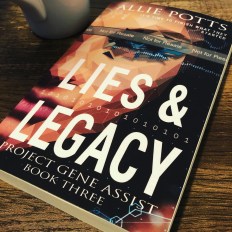
A matte finish on my dystopian Science Fiction worked for me

Every book needs a cover (you will absolutely be judged by it). So the next thing you have to decide, when setting up your print book, is whether you want your cover to be glossy, which can make colors pop, or if you prefer the smooth, yet edgy appearance of a matte finish. You can make this decision entirely on personal preference, as there is no real rule of guidance here. However, it’s also not a bad idea to visit your favorite bookstore and see what cover finish is featured on the best sellers in your category.

And if you come home with a brand new stack of books to add to your to-read-pile, well, I suppose that’s the cost of market research.

Barcodes

Of course, you can’t sell your book in brick and mortar stores without a barcode. We’ll I suppose you could… it just wouldn’t be strictly legal. Your print-ready book cover may already have a barcode built into the design, depending on how you produced it, but both IngramSpark and Kindle Direct Publishing will place a barcode on your cover for you if requested, for no cost.

I point this out because I’ve seen some services offer to sell you a barcode. You absolutely should not spend money. If you’d prefer to add the barcode to your cover file yourself, a quick Google Search will point you in the direction of a number of free barcode generator service. However, before you can complete this step, you’ll need an ISBN, which is a topic for another day.


However, if you would prefer not to navigate through a number of posts, I have also consolidated the entire series into a single downloadable PDF, which you can access by clicking here.

Print Book Formats and Printing Options

The following is part three in my I Want to Self-Publish: Now What? series

print book formats and printing options

I love my kindle, but there’s nothing like the smell and feel of printed words on the page. That said, it takes a lot more work to transform a manuscript into something that people will be proud to display on their shelves than it takes to get your book into an ereader’s device manager. In addition, once you hit publish, your book is out there for all the world to see—typos and all. So if your publishing plan includes this format, be sure you are giving yourself ample time to get it done right.

Print Book Formats – Paperback vs Hardback or Hardcover

I will admit I take more pride in my collection of hardbacks than I do my paperbacks (shh – don’t tell them). However, the cost to produce a hardback is significantly more than the cost of a paperback, which means if you want to publish a hardback, you will have to charge your readers more to return a profit.

There are also significantly more service companies willing to help you produce paperback versions of your self-published book than there are print houses for hardbacks. As a result, as much as I love my hardbacks, I don’t typically recommend going through all the trouble of this book format unless you have an existing, proven fan base, plan to produce your book in bulk, which will help drive down the printing cost, or are publishing an illustrated board book for children.

Book Printers for Self-Published Authors

Once you have determined what kind of print book you plan to publish, the next step in the process is to find someone who will actually do the printing for you as most of us don’t have a professional-grade printer in our home offices with appropriate binding equipment. The available options will depend greatly on your physical location.

That said, a few of the options in the US include:

Kindle Direct Publishing (KDP): Amazon’s print book division used to be CreateSpace, but this separate organization has been dissolved and now print books are produced by the same organization that manages ebook production. The service does not charge any fees for book setup or revision, however, its hardback option is best for children’s books as it does not include a more traditional dust-jacket option, and limits its global distribution feature to only a handful of book sizes.

IngramSpark (IS): great for selling hardbacks on Amazon or paperbacks online everywhere else. This service allows you to print both paperbacks and hardbacks, supports a large variety of book sizes, and will automatically distribute your book to several online retail sites. However, it does charge a setup fee and a revision fee unless you have a promo code.

Blurb: I don’t have personal experience with this service. That said, they do offer paperback, hardback, and photo book print options and have a partnership with Reedsy (affiliate link), which is a company that offers a free print book formatting program, plus hosts a network of editors and cover designers. While there are cheaper options in terms of printing costs, this could make it a great option for authors who want to keep everything related to their book project in one place.

Lulu: This service is very similar to what you can get with Ingram Spark, but does not require a setup fee. It also, in my opinion, has a better print quality than what is offered by Kindle Direct Publishing, but it costs more to actually print your book with this service versus the cost of printing with either KPD or IS. This means that while you might save some upfront investment using Lulu instead of IS, it will actually cost you margin in the long run. Still, it is another option.

BookBaby: I’ve not used this service to date, but BookBaby offers both on demand book printing service as well as wholesale book printing. It, like IS and Lulu, supports both paperback and hardback book formats, and can help you with book editing, design, and distribution in addition to printing your book. It also offers high-quality white paper that is specifically beneficial for photobooks and yearbooks with three binding options.

Local Print Houses: If you plan to stock your own inventory for resale, it is also a good idea to call around to see if there are any local printers in your area offering book printing service. While these smaller, local printers may charge more by the page than IngramSpark, they typically offer more design and formatting assistant services than what you can get from the national printers without paying significantly extra, and offer the benefit of face-to-face consultation.

Print on Demand (POD) vs Wholesale Book Printing

If you prefer not to hold inventory and plan to sell your physical books online then you want to set up an account with a print on demand (POD) organization. All of the printers I mentioned above support POD, with the exception of the local print option.

If you plan on selling books at speaking events or tradeshows then you need to use a print service that supports wholesale book printing. This means that the printer will produce your book in bulk, which benefits you by driving the individual book’s print cost down and allowing you to gain a higher margin on the sale. However, this model does require you to take possession of a carton of books at a time, so you want to make sure you are either comfortable housing that inventory in your home or are extra confident in your ability to sell it at an event.

Wholesale book printing can also benefit you if you intend to sell to brick and mortar bookstores, but unless you are a well-known name in your community, these stores typically will only stock your book on their shelves under a consignment model. This means that you only get paid for your book when it sells, minus their portion of the profit. They also might limit how much of their shelf space they are willing to let you have. As a result, you might be better off printing 3-5 books at a time under a POD model instead of ordering a full carton.

Bookstores aren’t the only option when it comes to brick and mortar sells. If you want to see your book on retail shelves, but wouldn’t mind a little less literary competition, I would encourage you to check out a book called An Author’s Guide to $elling Books to Non-Bookstores by Kristina Stanley.

Which is the Better Strategy?

You may start noting a theme here, but it’s worth noting that nothing I’ve discussed at this point is an either / or situation. You can set up your books with Amazon for online orders and still set the same book up with another printer to take advantage of bulk printing options. This is an especially helpful strategy if you want to sell both online and in brick and mortar stores as many independent book shops will not stock books printed by Amazon, who they see as a competitor.


However, if you would prefer not to navigate through a number of posts, I have also consolidated the entire series into a single downloadable PDF, which you can access by clicking here.

I Want To Self-Publish – Now What?

I recognize that not all of my readers are also writers, nor are all my reader-writers considering the self-publishing path. However, for those that are, I thought I’d peel back the curtain, so to speak, and provide another glimpse at the wild and wonderful world that is taking control of your literary destiny. The next few articles are for you.

self-published: now what

So you’ve made the decision to self-publish. Congratulations! You, like me, are now in control of your book’s publication. Unfortunately, that was only the first of a number of decisions you still need to make before you will get to see your book on the shelf. So perhaps I should be offering my condolences instead.

You may have decided self-publishing is for you before you’ve finished writing your manuscript. If so, nice work! This means you are already thinking about how you want to go to market, which will only help you build your author platform well before your launch date.

That said, if you don’t have your manuscript ready it’s probably better if you simply bookmark these instructions for future reference as there is little that you can do with them until you have a completed (and preferably edited) manuscript. Bonus points if it is formatted too, but I digress.

Now, if you have your completed manuscript, fantastic! That’s an enormous accomplishment and I hope you took at least an evening to celebrate.

So now what?

From here, it is time to familiarize yourself with publishing terminology while answering a number of questions. This will, in turn, help you determine what your next steps are. Luckily there are no wrong answers—just some answers are more work or more costly than others.

Some of the most basic questions you need to answer for yourself are these:

What do I want to publish?

A book, sure. But let’s get more specific. Exactly what kind of book do you want to publish and what format do you want that book to take? There are three different formats you can choose for your book: Ebook, paperback, and hardback, although paperback and hardback are fairly similar. Each have their own audiences, benefits, and drawbacks.

How do I want to distribute my book?

Amazon, or simply the ‘Zon as it is called in some circles, pretty much owns the book market at this point. Therefore, your best chance of earning a living wage off your writing, and your writing alone, is to publish on their platform. However, you don’t have to have an exclusive relationship with them if you don’t want to. Some authors take advantage of their Kindle Select program for ebooks, which offers things like countdown deals and enrollment in Kindle Unlimited (their subscription reading program), while also publishing the print version of their books on other platforms. Others publish ebooks and print books alike on multiple publishing platforms.

Who do I want to list as the Publisher of Record?

If you are only publishing an ebook, then this question isn’t as important. However, if you want your own name or brand name to be listed as the publisher of record for a printed book, then you will need to purchase an International Standard Book Number (ISBN) for each version of your book before you publish. In other words, if you want to have a paperback and a hardback version of your book, you will need to have two ISBNs.

How do I want readers to find me?

ISBNs help booksellers keep track of which book sale belongs to which author, but if you want readers to find you, you will need to hone up on your SEO knowledge. SEO stands for search engine optimization and it is just as important for improving your search rank on retail sites as it is on Google or Bing.

How much do I want to charge for my book?

Some authors set their first book in a series at an extremely low price point, knowing it might cost more to advertise the book than they expect to make off the sale because they expect readers to buy the follow-up books in the series at full price. Others decided to charge full price for all of their books as they believe it shows the reader that the book is high-quality. The choice, like everything in self-publishing, is up to you.

If this seems overwhelming, don’t worry, I will be expanding on some of these topics so that by the end of this series, you’ll feel a little less apprehensive about the publishing process. It’s only as scary as you let it be – just don’t expect it to be easy. Otherwise, everyone would do it.


Other posts in this series include:

However, if you would prefer not to navigate through a number of posts, I have also consolidated the entire series into a single downloadable PDF, which you can access by clicking here.

Lies and Legacy is go for launch

I’ve hummed the refrain from It’s My Party by Lesley Gore more than once over the last few days. You see, I had every reason to celebrate this week. After seven years of work and over a quarter-million words, I’d finally added the phrase ‘The End,’ to my science fiction trilogy, Project Gene Assist.

Unfortunately, the universe has a funny sense of humor. My series, which, I repeat, germinated in my brain seven years ago, set before and after a perfect storm of abusive technology, economic collapse, and a mysterious illness. The first book is the events leading up to the panic and societal upheaval, the second and third take place in the aftermath.

It was supposed to be thought-provoking, cautionary, and/or escapism.

It was supposed to be set in the future.

Most importantly, it was supposed to be fiction.

My book’s launch was supposed to include a number of things like:

Lies and Legacy

  • Signed paperback copies: sadly, orders of non-essential products that weren’t currently on the shelves have been delayed by major retail outlets. By all means, please order a paperback if interested—just understand it just might not reach you for a few weeks.
  • Light hors d’oeuvres & finger foods: bread and flour are in short supply around here, but that’s not the worst of all. According to my co-workers, there’s even been a run on dinosaur-shaped frozen chicken nuggets in some places.
  • A full house of close friends: if groups weren’t already limited, my current paper product inventory would have required me to ask guests to bring their own roll of toilet paper as an entrance fee.
  • More than one glass of wine: okay, this is still part of the plan—it’s just now happens to be a major part of the plan and the reason hosting a Facebook live event is unlikely to be the best idea for me this week.

So, yeah, the timing stinks. However, while it’s my party and I’ll cry if I want to (but I’ll try not to because there are a lot of people out there suffering more than me), I’m going to launch this book and celebrate its release anyway. In fact, I’m making an even more conscious effort during these times to celebrate all my daily wins—big and small. For example, on Mar 22, 2020 I made soft pretzels that actually tasted like soft pretzels.

Other notable wins:

  • Maybe it’s the quarantine/social-distance enforced cooking or maybe it’s the six months of dedicated meal tracking & step counting using the Noom app (affiliate link) but I’ve officially lost all the weight I put on bringing my non-book babies to life.
  • The local paper interviewed me about life as a reluctant homeschool mom & remote full-time worker (my advice to other parents: let things go—like housework or expectations that your kids will quietly sit in the background looking charming and well-behaved while your world is being filmed for strangers to see) – https://www.newsobserver.com/news/coronavirus/article241329721.html
  • I KNOW what my kids did all day at school instead of just hearing a grunt or ‘I forget,’ when asked, and have been enjoying a lively discussion of Roald Dahl’s The Twits (affiliate link) with my 8yo.
  • My kids actually WANT to go back to school (though tell me they are glad I’ve been home with them).
  • I’ve gotten most of my garden planted

Speaking of gardening, the leaves on the trees are budding, which reminds me that just like winter gives way to spring, this time too will someday become a distant memory. While that day can’t get here soon enough, at least I can take some small comfort knowing I controlled what I could. I did my best. I released a book.

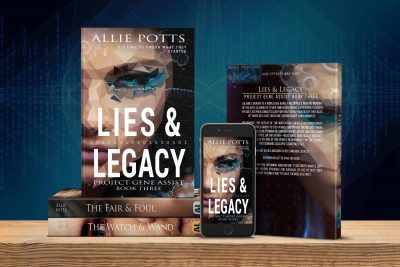
You can order Lies & Legacy or start at the beginning with The Fair & Foul