5 Reasons Your Book Takes Forever (and a Day) to Launch

I’ve said it before and I’ll say it again — writing the book is the easy part. For the past several weeks I have been practically chained to my desk getting Lies & Legacy ready for its big debut. Why does it take so long to publish a book after announcing the manuscript is done? I’m glad you asked.

If you are going to market via the traditional, or in some cases, the small press route, this is because the publishing house only wants to release a certain number of books at any given time so as not to compete against themselves. It’s an understandable concern, but frustrating from both the reader’s and the author’s perspective who are eager to get their hands on the book.

If you are publishing independently, it’s because of the following reasons:

1. Title Setup Forms

To independently sell a book, in a bookshop or online, it needs to first be setup in a retailer’s database. This means there are forms. So many forms. You have to register your book’s ISBN, which is an identification number used in the US and other markets by booksellers to ensure that books with the same title or author name don’t get mixed up on orders.

Then there are retail setup forms that need to be to filled out. If you are feeling masochistic ambitious, you can set up your book on each of the retail platforms individually. WideWizard is a browser extension that can help speed up this process. However, a distributor like Draft2Digital (affiliate link) will do this for you (but some take a portion of your sales and charges an initial fee as well as an ongoing maintenance fee, so there’s that).

2. Author Proofs

If you’re only interested in publishing an ebook, you can skip this step. However, if you are like me and want an actual physical book to gaze at lovingly, place on display like a trophy for all the world to see, or simply read, there’s the proof stage.
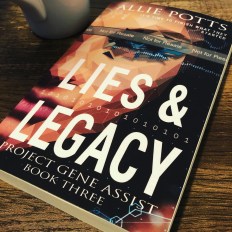
Technically, you can approve a book on Amazon or IngramSpark without ever actually laying your hands on a physical page, but I don’t particularly recommend it. I’ve learned the hard way that gremlins delight in sneaking in last-minute typos — the type you can’t catch in electronic format, no matter how many times you run your manuscript through editing software.

Unfortunately, this means you have to wait for your book to be printed, bound, packaged, and shipped to your door before you can move on to the next step. That said, there is something magical about receiving that first proof copy — even if it is has a big banner on the cover making it clear the book is ‘not for resale’ or if it does contain more than a few errors.

3. Revisions

As I mentioned, there are gremlins in publishing. I’ve received proofs with my name cut off on the spine, page numbers missing, length too tall, and random blank pages inserted in the middle seemingly with no sense of rhyme or reason. Seriously, NEVER publish a book without requesting a physical proof.

This means your files will require a round of revision. You’ll have to update your files and make sure that this time you REALLY take the time to visually inspect each and every single page (all 300+ of them, in my case). I don’t care how sick you are of reading your own story. DO IT.

4. Buzz Building

Superfans are awesome. Superfans count down the minute to your launch. They add your launch date to their calendars in permanent ink and put in a request to take the day after your launch off of work if only so they can stay up all night reading. Unfortunately, most people aren’t superfans — no matter how much they say they love your work.
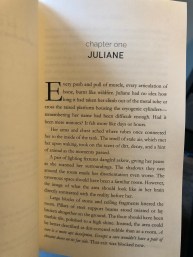
excerpt of Lies and LegacyYou have to build excitement while reminding people you have a book coming out. There are a number of ways to do this: post repeatedly on Facebook (but not too much or you can get yourself reported as spam. You can hop around other people’s blogs or post sneak previews on your own. (Psst – You can see an excerpt of Lies & Legacy on mine).

You can pay to get featured in a newsletter or negotiate a swap. You can also signup with a service like BookSweeps.com to be a part of a giveaway. Just note, you often have to schedule these at least six weeks in advance.

5. Reviews

While there’s no one way to launch a book, you’ll have the most success if you have reviews to go with it, as apparently few people (outside of the superfans) enjoy being the first to give your book a try. But it’s getting harder and harder every day to ensure your book has reviews when it is time to go live.

Amazon will flag reviews it deems as coming from a potentially biased connection. Sure, occasionally a real-life friend or acquaintance’s review will still get past Amazon’s quality checks, but I know of reviews being reduced to digital ether simply because the review came from an author’s Facebook page follower.

I’ve reached out to known book bloggers in the past, and will continue to do so in the future, offering an advance copy in the hopes they might provide an honest review. However, they are under no obligation to do so and there is always the risk Amazon won’t accept the review, which is why they also are free to post it when and wherever they want. It’s totally up to them.

This is why I have also started using BookSprout.co to handle my advance review requests. It takes me out of the equation. (It also has a sales report and keyword research tool if you are interested).

All I had to do was give them my ebook files and links where I’d like to see reviews posted. They take care of all the rest.

I worried about pirates the first time I used them, but the site seems to police itself. I also worried about the quality of the reviews, but all I’ve thus far received have been thoughtful and well-written. Unfortunately, they no longer offer a free plan for their services, but its entry-level paid plan is more affordable than what other review services charge.

I just wish they offered the option to purchase one-time review campaigns rather than a monthly subscription as months (or years) can go by between my publications. Even so, I’ve found it to be a worthwhile service overall for people who are trying to get reviews on other distributor sites (not just Amazon) or gain followers on Bookbub.

Speaking of which, you can click on the button below to follow me on Bookbub to see what I’ve been reading in between writing.

follow-me-on-bookbub-1

Lies & Legacy: Project Gene Assist Book 3 launched March 26, 2020

Editing Tools For Writers

Writers, whether they pursue traditional publication under the writer-agent model, publish under their own name, or sign with a smaller imprint, need to edit their work prior to submission. However, while some authors believe their background makes them a grammatical expert, the truth is no one should rely on a single set of eyes.

Unfortunately, professional editing services cost money, and as most reputable editors charge by the word, the cost to help you polish a full-fledged novel quickly adds up. I understand the temptation to do without. That said, I’ve also spent more than I would like to admit on editing services for words that, upon hindsight, never stood a chance of making it to the final proof copy.

Thankfully, while no online editing tool or plug-in is good enough to replace a set of human eyes—for now, there are several programs on the market today that can help you identify more than the occasional typo. Many can now check for tone, misused words, readability, and even provide recommendations to help your pacing. Even better, many of them are offered for free or at a price point that is low enough to pay for itself in short order.

As a result, editing software programs are critical applications for every aspiring author’s toolbox and can help you bridge the gap between rough draft and editor ready. I’ve used dozens over the years, some with more success than others. To save you from making many of the mistakes I have, I’ve compiled this list of those I’ve found to be the best for fiction and non-fiction writing.

editing tools for writers

Grammarly

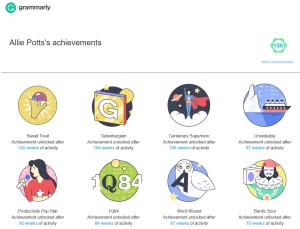
According to my Grammarly dashboard, the program has been correcting my text since 2015, so it’s a tool that has definitely impacted my writing. In fact, it has caught at least three errors in this paragraph since I started typing. That said, I’ve found the program misses errors occasionally when I’ve used it with Google Docs and I’ve had to disable it altogether on certain websites, like VistaPrint, as it doesn’t play nice with their text box editor.

Occasional bug aside, Grammarly has a free plan that works well as a spellchecker online via its browser extensions or as a Word plugin. However, there is also a premium version of the service, which can help you check tone, sentence variability, and make sure you aren’t inadvertently plagiarising online content.

Grammarly Achievements

  • Pros – It’s hard to beat free and is great for catching things like passive voice, incorrect punctuation, or misused homonyms in your daily writing. Plus, Grammarly sends out weekly progress reports telling you fun things like how unique your vocabulary is or how long you’ve kept your writing streak going which is great for staying motivated.
  • Cons – It’s much better suited for shorter business or online writing than creative long-form writing as it requires you to disable features like track changes in Word to operate.

ProWritingAid

ProWritingAid is another editing tool you can download and run as a plug-in with Word or Scrivener to check your writing or to check your writing online using its browser extension. Like Grammarly, its Chrome extension is free, however, in my opinion, its paid features, like its overused, cliche, echo, and consistency reports are well worth signing up for the premium version if you are a novelist.

prowritingaid reports

  • Pros – I can’t even begin to describe how much time this tool has helped me save looking for things like a missing quotation mark at the end of dialogue and identifying my clutch words and phrases. It is also more stable than Grammarly in certain web forms.
  • Cons – The plug-in for Word doesn’t always load correctly the first time, which has caused me to shut down Word and re-open my file on a semi-regular basis. In addition, the reports it runs can be somewhat overwhelming and do take a while to complete a check for a full manuscript.

Fictionary

Full disclosure, I am somewhat biased as I was invited to help test an early version of Fictionary, but I absolutely love what this program has to offer (they’ve also added a ton of extra features since then). Unlike all the other tools in this list, which I consider more copy-editing software, Fictionary is designed to help you automate a development edit.

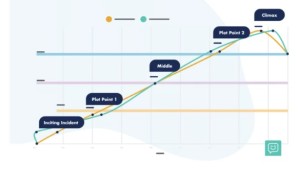
To use it, all you have to do is upload your manuscript and tag where your plot points are located. Fictionary will then tell you if your pacing is too fast or too slow with a graphical representation of the story arc. It can also help point out things that can help strengthen your story like are the five senses represented in each scene of your writing, has a character gone missing from the story, or are you varying your openings and closings enough to keep your reader interested.

Fictionary Story Arc
graphical representation of the story arc from Fictionary.com
  • Pros – While I still put more stock in beta reader feedback than I do a computer program, allowed me to perform a proactive developmental edit before I risked my reputation or burdened advance readers with a two-dimensional story.
  • Cons – Fictionary advertises that it can help you evaluate and revise your manuscript against 38 story elements. This sounds like a pro, until you are actually ready to make all those edits. If you are a pantser rather than plotter, you may not have had a goal for each scene in mind related to the overall plot or may have included scenes you loved to write, but don’t serve any purpose. Tagging all these elements in the software can be overwhelming as well as time-consuming. It’s also not free, which is understandable given its value but does offer a free trial.

Hemingway App

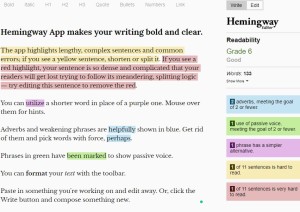
The Hemingway App, also known as the Hemingway Editor is offered as either a online editing tool or as a desktop app designed around making your prose more like Ernest Hemingway’s. That is to say, it will help your writing get right to the point, which is clearly something I need more help with. The tool highlights sentences that it deems too long, identifies adverbs that are keeping you from showing rather than telling, and warns you about passive voice, and gives you a readability score which can help you better connect with your target audience.

HemingwayApp

  • Pros – The free online tool loads quickly and features easy to interpret color codes which change in real-time as you edit your copy. The paid desktop version also lets you publish directly to WordPress and Medium, making it a great editing option for serialized stories.
  • Cons – Not everyone is a fan of Ernest Hemingway’s style of writing. Was I forced to read 127 pages about an old man trying to reel in a marlin? Yes, I was. Did I enjoy it? No, I did not. Also, it does not integrate directly into other word processing programs, meaning you can use it to tweak your copy, but then will need to export it to Word, text, or PDF before you can do anything with it.

EditMinion

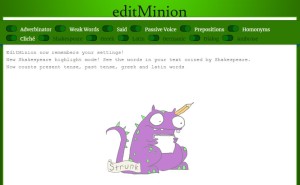
Before I bit the bullet and purchased the premium version of ProWritingAid, I used EditMinion to help polish up my work before sending it out for a professional edit. EditMinion is a completely free online editing program, that helps identify cliche phrases, passive voice, adverbs, and missing dialogue tags. However, it relies on copy and paste, and can only check a chapter of your text at a time.

EditMinion

  • Pros – It’s simple and you can’t beat the price point. Also, because there is absolutely nothing to download, you don’t risk corrupting your files or crashing other applications.
  • Cons – Copying and pasting each chapter one by one into the program can feel agonizingly slow, especially when you feel like you are so close to the literary finish line you can practically taste it. The tool also does not help your writing outside of the app or let you know if you have accidentally misspelled a character name. As a result, I use it when I need a second opinion but rely on the other products for heavier edits.

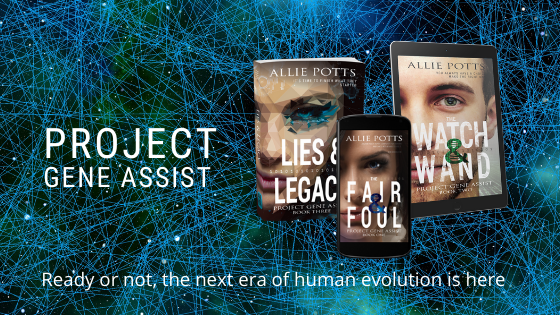
I am delighted to report I have reached the end of an editing project yet again and will be releasing my fifth full-length novel, Lies and Legacy: Project Gene Assist Book 3 to the general public in March 2020. You can read more about this series by visiting my Project Gene Assist book page, or by visiting your favorite online retailer to pre-order a copy.

Project Gene Assist Series Banner

Empty Chairs

artem-maltsev-aSscHG6lvko-unsplash
Photo by Artem Maltsev on Unsplash

There will be two empty chairs at our table this year.

One, left just as the party was really getting underway. While the other wouldn’t have surprised me had he stayed well past closing time.

Someone new will have to carve the turkey this year. Another to be among the first to nurse a glass of holiday wine.

No one will worry this year if I take too long in the shower. No one will judge if I go back for another slice of pie.

Two empty chairs, once filled by two very different people.

We’ll be raising our glasses in remembrance this year. However, I’ll try not to dwell on all the reasons to be sad.

In between courses, I’ll gaze out the window. I’ll see the waves on the lake ebb and flow. And like those waters, I know other guests will join us as the years go by. My family will continue to grow.

I am thankful there is room still at our table.

Even if today, it also means there are two empty chairs.

Getting back into shape

I make no secret of the fact that I have a day job in addition to writing my novels. Some in the publishing community say it means I don’t take my dreams seriously enough. My children, however, have told me once or twice that they enjoy eating. As their voices are typically loudest in my ear, I tend to listen to them more than faceless critics. That said, it also helps that I enjoy my day job too.

While my day job has a corporate headquarters, its staff are scattered across North America. This has allowed me to meet and interact with people coming from a variety of backgrounds and life experiences, which has been an even bigger plus. I’ve also since learned that I am one of many who have chosen to give a new career a chance.

For example, I learned the other day that one of our most recent hires was a spin instructor in her once-upon-a-time past professional life. It came up in conversation when she mentioned she was stiff and was shocked by how out of shape she’d become. She also mentioned how difficult it was to get back into a workout routine after taking an extended absence.

It occurred to me that I could say the same about my blog writing habits.

I’d been incredibly disciplined for several years. I’d written even when I could barely summon the energy to get out of bed thanks to a fever. I’d strung words together in between birthday parties and bedtimes. I’d filled page after page time and time again. I’d told myself once the manuscript was done getting back into the blogging habit would be easy.

It is not. It’s not that I’ve forgotten the formula. If anything, I know what needs to be done better than I did before. However, I’ve forgotten how to properly warm-up. That said, I’m here today. I showed up. I followed my own former instructions.

I might not be fit enough to teach a class at the moment, but I’ve taken my first step toward getting back into shape. And when it comes to writing, or pretty much anything else for that matter, there is a lot more you can accomplish by trying than by giving in to all the many excuses to hold it off another day.

The Book That Almost Broke Me

I did it.

I wrote another book.

Ok, in fairness, I wrote another manuscript. The book part will be a few weeks longer yet as it still needs to go through early reads, professional edits, and formatting. But I wrote another book. (Update – the book is done and scheduled for launch on March 26, 2020)

So what, you might be saying. You’re a writer — a novelist — that’s what you’re supposed to do. I thought so too until I tried to write this one.

However, this time was different from the rest.

Perhaps it was the fact that it is the final book in my science fiction trilogy. It was as if my characters refused to share their story with me, knowing it likely was their last.

Perhaps it was the new house or the new job. Maybe my brain needed its old combination of background and routine to get into its groove.

Perhaps it was my family. The kids are getting older now. I am unfortunately finding they aren’t as willing to go to bed before the sun completely sets, just because their mom needs to hit her daily word count. Nor have our weekend become any less full.

Perhaps it was simply me.

amuse yourself with more writer problem memes at https://writerblueprint.com/writing-memes/

I should have finished this manuscript in February. That was my intent. I would take a break from the blog for the holidays and focus, instead, entirely on it. When February passed, I said, eh, it’s a short month anyway, I’m not that far behind.

Weeks stretched into months and still the most glorious words in the writer’s language, ‘the end’ continued to elude me.

I wrote during this time. Don’t get me wrong, but it was a steaming pile of word turd mixed with verbal vomit left behind to fill a blank page and little more. Thanks for that imagery, you might be thinking. Just be glad you weren’t the one expected to clean it up.

This is all to say, I might be late, but I’m still here.

I set a goal — I missed it — but I didn’t let a self-imposed deadline stop me.

Instead, I found a way to finish what I started.

I wrote a book.


Update: Lies & Legacy: Project Gene Assist Book Three is available for pre-order at books2read.com/u/bMpYAv

Project Gene Assist Series Banner