How to close a killer deal – how I got tricked by a 5-year-old

How to close a potentially killer deal - www.alliepottswrites.com #salestips“If you lost all your skin …, would you die?”

Up until that moment, I’d been enjoying a few minutes of downtime with some light reading after a long work day. LT’s latest five-year-old pondering caught me off guard. He had to be asking someone else.

Putting down my magazine, I looked around the room, attempting to locate any other member of my family LT could be addressing. Of course, neither my husband nor my eldest son made eye contact. It would appear I was on my own. “Er … um … as in, if I lost all of it? All at once?”

He nodded.

“Then, yes,” I answered with caution, somewhat worried about what must be going through LT’s head to prompt such a random question.

“Why?” LT asked, elongating the word as only kids can as he took a step closer, eliminating any chance for my escape.

Once again I looked around the room for anything at all I might use as a diversion. “Because without my skin my insides wouldn’t stay inside.” We’re a very technical household.

I could see LT chewing over my answer in his mind as I braced myself for another round of questioning. Instead, he only smiled. “I am going to give you more skin so you won’t die.” He hugged my leg, satisfied with his solution.

Occasionally I wonder if my youngest may be a wee bit off unique.”Um … thanks …?” I replied as he wandered away, but all I could think about was the line by Buffalo Bill in Silence of the Lambs – ‘It rubs the lotion on its skin.’

A day or so later, LT approached me with an orange. “Do you need me to help you with that?” I asked. Once again LT nodded. Within short order, I handed him the peeled results. “Here you go. Now throw the peel in the trash, please.”

“That’s for you, mommy. It’s skin,” he replied with a smile before shoving the fruit into his mouth and hopping away.

I looked at the peel in my hand and remembered our earlier conversation. It was skin. It hit me then – LT had indeed figured out a way to keep his promise (even better, no humans were harmed in the process). That’s a relief, I thought as I walked his ‘gift’ over to the trashcan.

kid's tea party
Good evening, Clarice

As I closed the lid on the trashcan, another thought occurred to me – not only had LT gotten me to throw his garbage away for him, he’d managed to do it in a way that made me grateful for the opportunity. It almost made me wonder if this was the end result he’d had in mind from the start. LT is no budding Buffalo Bill but he could yet be the next Hannibal Lecter (minus the serial killing and cannibalism).

Or he might just be a really good salesperson.

Why? Because at five, he already knows how to close a deal. Lucky kid. Here are just a few of the lessons I’ve learned from watching him (and this goes for selling goods such as books, services, or tricking your parents into doing chores for you) –

  1. Never open with the hard sell

Just like if someone walked into a room and announced without preamble, buy my stuff if LT had given me his orange peel and told me to throw it away for him, I would have said absolutely not. First, because that’s rude, and second, because I know he has two good feet. Instead, he managed to reframed the conversation by priming me to think that orange peel in my hand was a good thing.

But how?

2. Connect on an emotional level

Even those who consider themselves fact-based decision makers, make decisions based on the facts that make them feel like they made the smart and rational decision. The prospect needs to feel good about the decision – not obligated. If he’d dropped the peel at my feet and run away without first reframing the conversation, I probably would have thrown it away for him. Once. But rest assured my youngest would be regretting that poor choice in the not too distant future.

But how?

3. Highlight the potential benefits

Will the reader be entertained, learn something new, or think about life in a new way? Will the prospect save time or money? Will mommy live longer thanks to an extra layer of vitamin C goodness? Your book, service, or product should exist for a reason other than to only make you rich. Don’t be subtle about it. If you leave it up to a potential reader / client / customer to connect the dots, there is a chance they won’t.

But how?

4. Identify the pain

In other words, take the time to really get to know your audience. You know who they are and where to find them, but what is it they wish they had more of? Why don’t they? It is also just as important to find out why they’ve tolerated less up to this point so you can anticipate how to overcome obstacles and objections. Tailor your pitch accordingly. You don’t want to risk dying, mommy, do you?

But how?

5. Keep your promises and follow-up

LT’s seemingly random question may have been mostly forgotten after an amusing conversation shared between friends and family, and a statement on twitter, if it weren’t for his follow-up as well as how he kept his promise.

While he may not have successfully sold me on throwing his garbage away for the rest of time, by this simple act, he has ensured I’ll never look at his leftover orange peels in the same way ever again, and that’s no small deal.


8 Highly effective ways NOT to promote YOU

background image courtesy of Ricky Kharawala and Unsplash

There are a number of things I am good at, however, self-promotion is not one of them. Ask any of the people who comment on my posts regularly. Heck, ask pretty much anyone. Chances are they will agree. As a firm believer in the concept that there is always something to learn, some additional skill to master, I rarely consider myself an expert in anything, but if there is one thing I deserve an honorary Ph.D. in, it is in how NOT to self-promote.

So I hope you will sit back and enjoy these tried and true tips from Dr. Potts.

  1. Treat your interests and hobbies like state secrets, better yet, treat them better

Don’t share anything that you do for fun with anyone. When people ask you to tell them a little about yourself, convince yourself that they are only looking for a way to bring the conversation back to what it is they do or what they sell. Stick to the expected script. Only tell them about surface level things such as your day job and never expand upon your hopes, goals, and dreams. Limit your networking to only watching shows on TV.

If you actually let it slip that you enjoying painting, for example, your sibling might call to ask you to help with a mural on a child’s wall. Even worse, someone not related to you might actually make you an offer to be *gulp* paid professionally for your hobby.

2. Keep your smiles to yourself

If you find yourself doing a job that makes you want to smile, bury that joy deep down. If it looks like you are actually having fun performing a task that others view as work those same others might start thinking of additional ways to make you smile. If you aren’t careful, you might just be asked to paint another mural in the not too distant future. Or worse, your connections might just introduce you, and your skills, to their other connections, and what did we just cover about networking in tip number 1.

3. Never accept compliments

That beautiful thing you just created. It was a pure fluke. If it hadn’t been that spasm in your back keeping you from adding additional brush strokes or the sun blinding you at just the right time, you would surely ruin it. It certainly had nothing to do with skill or honed practice. Those are gifts only possessed by the professionals and this was just something you do when you don’t have anything else to do and you got lucky. Make sure you emphasize the word ‘just’ repeatedly. ‘It’s just a hobby.’ ‘I’m just doing it for fun.’ ‘I just got started.’ Deflect, deflect, deflect

4. Destroy the evidence

Be like Tibetan monks and treat your interests like the Sand Mandala. Enjoy your hobbies simply for the moment and then get rid of any trace of evidence the minute the task is over. Under no circumstances should you actually save things in a way that someone might misinterpret as a portfolio or resume. Someone might misinterpret that sort of thing as credibility.

5. Convince yourself that timing needs to be right

Success is all about being in the right place and the right time. If you can just be patient enough to wait for that perfect time to call yourself a qualified expert, your name is bound to be in the headlines. The fact that those headlines may be in the obituary section is only a minor detail.

6. Never publicize your accomplishments or other interests on social media

That’s the sort of information that can be used against you. The next thing you know, you will be hit by all sorts of spam bots showing advertising for products you actually might be interested in buying, classes that might help you hone those skills, or even worse. What if some stranger actually contacted you about your not-so-secret skills with genuine interest? Didn’t your parents always tell you not to talk to strangers?

7. Don’t treat yourself as a boss or your hobby as a business

They say that the day you start doing what you love, you will never work another day in your life. Do you really want to put yourself out of work?

8. Associate your self-worth with the success of your business or product

Never remind yourself that even the most valued companies have product flops. A failure today is proof that you could fail tomorrow.


But… a failure today at least means you tried, and that you is worthy of promotion.

How to make an author panic in 3 easy steps

A friend posted a picture of her son, roughly Kiddo’s age, riding a bike, which while cute, was more notable by the fact that the child’s training wheels were off. Seeing the picture, I’d asked Kiddo if he’d like to give it a try too.

“Just imagine – you’ll be able to go biking with the big kids. When you don’t have training wheels, you could even go to the park by yourself or even to Nana’s. Doesn’t that sound like fun?”

Lamont and I wheeled the bike out. After strapped Kiddo’s helmet on tight, Lamont and I took turns holding Kiddo’s bike upright as our son wavered and wobbled down the side of the street. Still, no matter what we said, or how we cheered, it was clear that Kiddo’s confidence wasn’t quite there. Lamont tried the old parent stand-by. Running behind Kiddo, he simply let go.

Kiddo wasn’t fooled for an instant. Crash. Scrape. “How could you!”

“It’s important you keep trying,” we’d told him, hoisting the bike back up. To give him credit, he did. Several more times. But no matter how hard we tried, gravity (and more than a little fear) continued to knock him down.

“Try pedaling faster,” we’d suggest loudly. “Try actually steering…” we’d mutter more to ourselves.

Flustered, we eventually decided we’d tried long enough. “Most people don’t get it right on the first day,” I told Kiddo. We’d keep trying, a few minutes a day. He’d get the hang of it in no time.

We didn’t. He didn’t. The weather got hot. The dog needed walking. There were any number of excuses that cropped up. Finally, we simply reattached the training wheels. The timing simply wasn’t right.

It is easy to make excuses. But the weather has begun to cool. Those excuses are now running out. It is time for Kiddo to get back on his bike. Which brings me to the other subject of this post.

How to make an author panic in three easy steps.

  1. Tell them you’ve bought their book. Okay, technically step one is usually enough to send me into cold sweats, but then again, just because they’ve bought it, doesn’t mean they’ve read it. So…
  2. Recommend they look into marketing techniques such as podcasts. All the cool authors are doing it
  3. Encourage them to contact hosts. It’s so easy! Just follow their instructions.

There are those in the writing world with far more years of experience under their belts, who recommend not worrying much about book promotion until you have at least three if not five books to your name. In theory, this method allows you to have a greater catalog ready to offer readers when promotion efforts hook new readers. One book at a discount could turn into multiple book sales by return readers.

Take the Apple for example. Sure, Apple spends most of its time promoting the iPhone, but that is only one of their products. Once they’ve gotten you hooked on the device, you are more inclined to purchase accessories or even less advertised gadgets. The same principle applies to books. Promotion takes a lot of work. You want to ensure you have the best return possible.

This was also a convenient strategy for me. I accepted I would not be an overnight success. I dare say I embraced it. I felt justified not worrying about marketing beyond the occasional giveaway or occasional guest piece as I worked away on the next project.

Unfortunately, as I neared the final pages of this draft it occurred to me that I will have three books to my name in the coming months. Which means it is time for the marketing training wheels to come off. In a fit of insanity, masquerading as bravery, I researched blog and radio hosts who might be interested in discussing a book like mine. I figured, what’s the worst that could happen?

Within days I received a message back. They’d love to have me on their show. My heart began to race as the reality of what I’d done began to sink in. I’d have to talk to people I’d never met. Publicly! I read further. In September. Phew! September was weeks away. My breathing calmed. I’d have plenty of time to get myself mentally prepare by then.

Only… the weather is beginning to cool. School has resumed. It is already mid-September and my show is coming up in one week. September 23rd at 6pm Eastern time to be exact.

So now I have one week to calm my nerves. It’s not like this is your first guest appearance, Allie. One week to practice my selected reading. Wait. What? One week to ponder why writing, which traditionally is such an introverted activity, requires so much extroverted follow-up. Really. Why? And one week to remind myself of reasons I am doing this. I want to be able to ride with the big kids one day as much as I want to set an example for my sons. But also, just as importantly, I am doing this because I’m proud of what I’ve done.

It is time to dust off the virtual helmet and restock the band aids. So wish me luck. Here I go.

How to write with kids under 10 without losing your mind

How to write with kids under 10 without losing your mind
image courtesy of pixabay

Okay, so my headline is somewhat misleading. If you are attempting to write more than the occasional thank you note or note to the teacher about how very disappointed you were to learn of your normally charming daughter, Jenny’s decision to cut friend Mary’s hair in class, or why the teacher shouldn’t be alarmed when your son, Danny demands an extra seat at his desk for his imaginary friend, Mr. Hinklesworth, chances are your mind is already a little. . .well. . .off.

But according to my headline analyzer, “How to write with kids under 10 without losing more of your mind,” was considered too wordy.

1) Set boundaries

Set aside a little place in your world where you can go where you write uninterrupted. It is best if the only way to enter this place is by passing through a mystic portal accessed only by answering a series of three challenging questions administered by increasingly menacing figures, but I suppose any office, bedroom, or garden retreat or closet nook can do too. Just make sure that everyone knows that when mommy or daddy go to write they have effectively traveled to China (unless you already live in China in which case Kansas might do).

2) Actually enforce those boundaries 

Children can sense when adults want to do something that doesn’t involve them and it drives them mad. The little buggers will let loose a type of wall piercing shriek the likes of which the Department of Defense would pay billions to develop. Fight the urge to leave your writing sanctuary with every ounce of willpower you possess. You are supposed to be in China/Kansas, remember. Besides, it can’t be all that bad. As long as they are screaming, at least you know they are still breathing, right?

3) Schedule your writing in realistic chunks that fit your lifestyle

Yeah, who am I kidding in that last tip? No mind can withstand more than a minute or two of that sort of mental assault before caving. But once you leave your sanctuary, it unlikely your little hellions cherubs will allow you go back anytime soon, so you might as well plan accordingly. If you thrive on two to three hours sleep, writing in the early morning or late at night may work for you, but for those of us who require a few more REM cycles, it is easier to break up a day’s writing goal into a few fifteen to thirty minute sessions per day and can be an absolute sanity saver. Another blogger, Sacha Black, introduced me to this tip, referring to these micro sessions as writing sprints. She has written up a helpful piece to help you determine what size sprint is best for you.

4) Cut your cable

Better yet, turn the TV off altogether, but if you are like me and still occasionally need to veg out, do it smart. While the EU limits the length of commercial interruptions to no more than twelve minutes per hour of programming in the US, commercials can make up about 30% or more of air time. As much as it pained me at first, I’ve stopped watching live TV. Thanks to streaming without commercials, I can watch my favorite hour-long show in forty-five minutes. (It’s magic!) I now have an extra fifteen minutes to write if I so choose. Sure, it means putting up with some delayed gratification and extra heavy spoiler evasion, but we all must make sacrifices for our art.

5) Keep your deadlines long and your notes close

Even with the best of intentions, you aren’t going to be able to hit your goal every day, even with micro-sessions. You’ll have summer break or have to deal with yet another round of the bug that’s so fun to share that everyone in the family gets a turn. These things happen. The thing to keep in mind is unless you were offered a contract, the only one who cares about your deadline is you (yes, I know – I have a hard time accepting this too. I am all twitchy just to write it). Sure you might disappoint a few fans by failing to deliver as quickly as they would like (cough. . .cough. . . George R. R. Martin, I am looking at you), but they aren’t exactly lighting up your phone with offers to babysit (for free) so that you can write in peace, now are they?

6) Back-up everything!

Say you do all of the above. The children are blissfully asleep. Even better, they’d gone down with hardly a fight. Your partner is off taking a run (or doing whatever it is he or she does when you go all writerly on them). The house is wonderfully quiet as you revise the third draft of your latest novel. Only a few more chapters to go. You are in the zone. Suddenly the cursor on your screen moves and an ‘a’ you know you didn’t type appears on the page. Then another. And another. Suddenly there is a whole line of ‘aaaaaaaaaaaaaaaaaaaaaaaaaaaaaaaas’. Panicked, you bang on the ESC key. The cursor blinks at you as if it is not only aware of your fright, it is amused. Then the whole room is blanketed in a bright blue light coming from your screen.

You feel like Darth Vader just told you he was your father. NOOOOOOOOOOOOOOOOOOOOOOO!

Sounds horrible? Yes. It. Was. I was able to recover my file. That time. But thanks to the school system exposing the young to computer skills at a young age, I can no longer trust that my children won’t download a virus or click on a ransomware link. Heck, I can barely trust myself not to do that.

7) Remember why you started in the first place

Were you doing it for the money? The fame? The accolades? (If so, I’d love to see your marketing plan. Really – I would! Please contact me). Occasionally take a step back so that you can see how far you’ve already come. You can do this.

Onward and upward – fun with mind manipulation

Writing a novel is like running a marathon. You train and train, conditioning your body through smaller “fun” runs as you gradually build up some confidence and stamina. Then it is the day of the event, the thing you have been training toward for the last several weeks if not months. A crowd surrounds you. Their excitement is contagious. “See you on the other side!” and “Let’s do this!” You are anxious, but anything is possible. You take off.

Then, six miles later or so, you see that the course contains a hill (not to mention another ~twenty miles) and you start questioning why in the world you ever thought this was a novel idea (pun intended). You start contemplating veering off with the half marathoners, but that still means you have to somehow find it in you to run another ~seven miles. Ugh.

At this point, you realize you are thoroughly outta luck, so you might as well keep putting one foot in front of the other.

Image courtesy of Imgur

You adjust your pace and trick your mind into ignoring things like mile markers while instead focusing on smaller, more achievable goals. I just have to make it to that street sign or the next water station without walking. You look around and see spectator signs like “If this were easy, it would be called your mom,” or “remember you paid for this.” You’d laugh if it didn’t make you wheeze (or puke), but it is exactly the reminder you needed.

You may not get a spot on the podium, but you know that as long as you finish, even if you wind up crawling across the line, you are still getting a medal for your effort. It hurts to go forward, but you also know it just might kill you at this point to go back empty-handed.

I am at the base of that hill with my current work in process. Day job, illness, and life in general, knocked me off schedule. Even worse, as much as I want to push my characters forward, they seem equally determined to catch their breath. I am tempted to write in some zombies or talking animals from another dimension just to mix it up, except I’m pretty sure I would ultimately have to cut the scene out. I can feel my will to continue begin to be tested (oh, why didn’t I set out to write a short story, or at most, a novella?) But as starting another project (with zombies… no…, dragon zombies… from space!) or taking an indefinite hiatus (don’t even think it) are equally unacceptable options, I’ve come to the realization that it is time to start utilizing the tricks that kept me motivated two times before. It is time to pull out the signs.

In my case, that usually means mocking up a cover or two as I have an easier time visualizing my goal if I have an idea of what it might look like when I cross the finish line. Which brings me to cover design.

I am always on the lookout for ways to improve any aspect of my authorprenuerism and recently watched a special on the topic of something called the golden ratio, 1.618, or phi. Supposedly this near mystic ratio can be found among plants and shells almost as if the natural world was actually planned by mathematics. It is repeated in architecture such as the Parthenon and its proportions found in art like the Mona Lisa.

To create it, you draw a rectangle (one size is 1x, the other side is 0.618x). Then while keeping the rectangle’s proportions the same, rotate and resize the rectangle so that its longest side now fits within its shortest side (or… you can simply find a ready-made golden ratio template on the internet).

Golden Ratio
Golden Ratio (image courtesy of Wikimedia Commons)

Its use is also suggested to be a form of mind manipulation. There are those in the marketing world who believe that design based on this ratio is also more appealing to consumers that designs that do not. Intrigued, I decided to first test out how well my existing covers conformed to this ratio.

Golden-ratio-UFGolden-ratio-FFAccording to the theory, a consumer’s eyes are expected to naturally follow a line of curvature within the golden rectangle. The rectangles should then act as a guide for the placement of design elements.

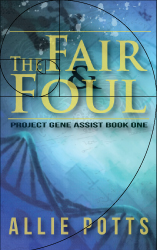
I was somewhat shocked but overall pleased to see that both of my covers roughly fit within the design rules I hadn’t previously known existed. For example, if the theory is true, a would-be reader’s eye is drawn to the chasm beneath the woman in An Uncertain Faith suggesting my main character’s trying situation while on The Fair & Foul, a reader’s eyes are drawn to my name which will help achieve brand recognition.

Of course there are others who believe that the golden ratio is purely a myth or that there are other more appealing rectangle sizes, but considering how important cover design can be to the success of a book, it is definitely something I will be keeping in mind moving forward.

And move forward I will.